

Providing Your Own Equipment
What You Need to Know
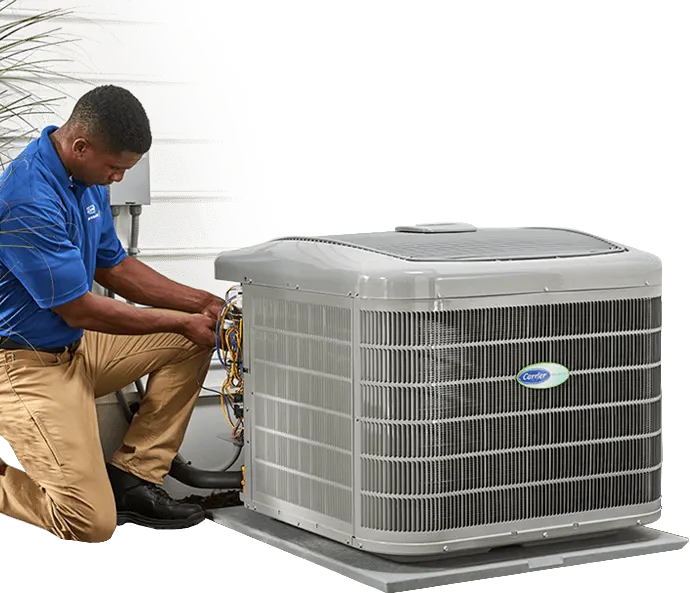
In these days of tight budgets and high energy prices, some homeowners and do-it-yourselfers may try to save money on their home heating or air conditioning system by purchasing the equipment directly from a wholesale supplier either locally or from the Internet. Our experience suggests that this is usually not a good idea and we do not recommend changing out equipment without a licensed HVAC contractor.
Here are some things you should consider first if you are planning to replace your heating or air conditioning equipment.
1. Can you and should you install the equipment yourself? Even if you're the handy type around the house, installing your own HVAC equipment can be a real challenge. First, it requires some special and expensive tools, as well as the knowledge to use them. It also requires knowledge of local and national codes. Modern systems in general require specialized knowledge. You may not realize it, but most manufacturers require that their systems be installed by a licensed, certified installer and for good reason… warranties! New systems must be properly set up with instruments like combustion analyzers, draft gauges, electronic analyzers to measure super heat and refrigerant charges, electrical testing equipment, etc. to make sure the installation is properly adjusted for the application. Installation, more than product quality, is the single most important factor in determining system longevity.
2. Will you be able to get a reliable contractor to install your equipment? Most HVAC contractors definitely do NOT like to install equipment that has been purchased by the homeowner! There are several reasons for this:
· The installer may not be familiar with the equipment you have chosen or may not feel the equipment is a good choice. (There could be several very good reasons for this based on the contractor's experience.)
· The contractor will not be making any profit from the equipment and will not be able to provide the level of service after the sale that he or she usually provides. Part of the profit on equipment enables the contractor to provide labor warranties and other service benefits that go beyond what the manufacturers provide. This is the value added by a good contractor. Contractors develop a good working relationship with the distributors and wholesalers from whom they purchase their equipment. This relationship enables them to handle any potential problems with defective parts or outright total failures and is critically important in getting problems resolved quickly!
· Your contractor only has so many working hours in a day. In the event of a breakdown, customers with labor warranties on equipment that the contractor has personally installed will be serviced first. So, you may wait longer to have your heat or air conditioning fixed in the event of a problem.
3. Are you sure the equipment you've selected is right for the job? You've done some research on the Internet and determined the equipment you want for you home, but…
· Is it sized properly for your property?
If any changes have been made to the home (such as adding insulation, replacing old windows, changing the shading of the house by landscaping, adding a new addition, or turning part of the house that was previously unconditioned space into living space), then you have probably changed the heating and cooling load.
· Have you done a load study?
· Do you know what size ducts are needed if you are adding an addition?
· Will your present duct system be adequate to handle the additional airflow needed for an addition or will duct system changes need to be made?
· What about return air?
These and other questions need to be addressed so your new system will give you the comfort you are paying for. These issues will be taken into consideration by a good, reputable contractor with the experience to ask the right questions.
4. What if something goes wrong? This is probably the biggest downfall to purchasing and/or installing HVAC equipment yourself! There are several bad situations that can happen.
· If you do a partial install (that is, putting all the equipment in place, running electric lines and AC line sets, running and connecting ductwork, etc.), you still have to find a certified tech to make the actual connections like electrical connections and purging, and evacuating and charging the system with Freon. If a contractor agrees to do this connection, you must remember that he or she is not responsible for your installation! The contractor is only there to connect and charge the system. If there is a problem with the equipment because you didn't install something properly, you will have to pay the contractor to find that problem and correct it! Sometimes a problem with an installation is evident right away and sometimes it may show up weeks, months, or even years later. For example, improper airflow in a system due to incorrect duct sizing can, over time, cause premature equipment failure.
· Even if you have a contractor do the entire installation of the equipment you have purchased, he or she is still only responsible for the installation, not the equipment itself. This means if there are any problems with the equipment requiring that a part be replaced, you will have to pay the contractor to find the problem and remove the part. The contractor will then hand it to you because it's your responsibility to get the replacement part under warranty from the manufacturer. When you receive the no-charge warranty replacement part, you will again have to pay the contractor to reinstall the part
· Please read this carefully so it is very clear to you: The manufacturer's standard warranty does NOT cover labor. This is something many people do not understand. They feel that if the part is in warranty, then the labor to replace the part should be covered, too; however, this is not usually the case. Some manufacturers offer extended warranties that include labor for a limited time, but these are generally offered through the contractor and are administered through the contractor. This is why most good contractors will offer a labor warranty on the overall installation and equipment. Sometimes, it's included in the initial quote and sometimes offered at an additional cost. Part of the process in choosing a contractor includes comparing the warranties being offered by each contractor. For example, an air conditioning system warranty may cover all parts and labor for one-year after which only the compressor is warranted for an additional five or ten years with some labor allowance or no labor allowance. As stated earlier, manufacturers' warranties are administered through the contractor! Manufacturers prefer it this way because the contractor speaks the same language. Manufactures don't want to pay out unnecessarily on claims that are not legitimate warranty issues, and the contractor is better able to make that determination. The bottom line here is that a good, reputable contractor with a proven track record of supplying and installing quality equipment provides the most bang for the buck. By providing good service and honoring theirs' and the manufacturers' warranties, contractors help ensure their business' future. During any given year, a contractor will find that on some jobs, less money was made than on others because of honoring warranties and, sometimes, he or she may even lose some money. However, the overall interests of the business will be well served and so will yours because the contractor will be there in the future to take care of your HVAC needs. Remember, it is true that you get what you pay for, and paying extra for a good contractor and a good installation will be well worth it in the long run.